Post-Event Blog: ACE Network, UKACC and MathWorks Summer School 2026
Post-Event Blog: ACE Network / UKACC/ MathWorks Early Career Researchers & PhD Summer School 2026
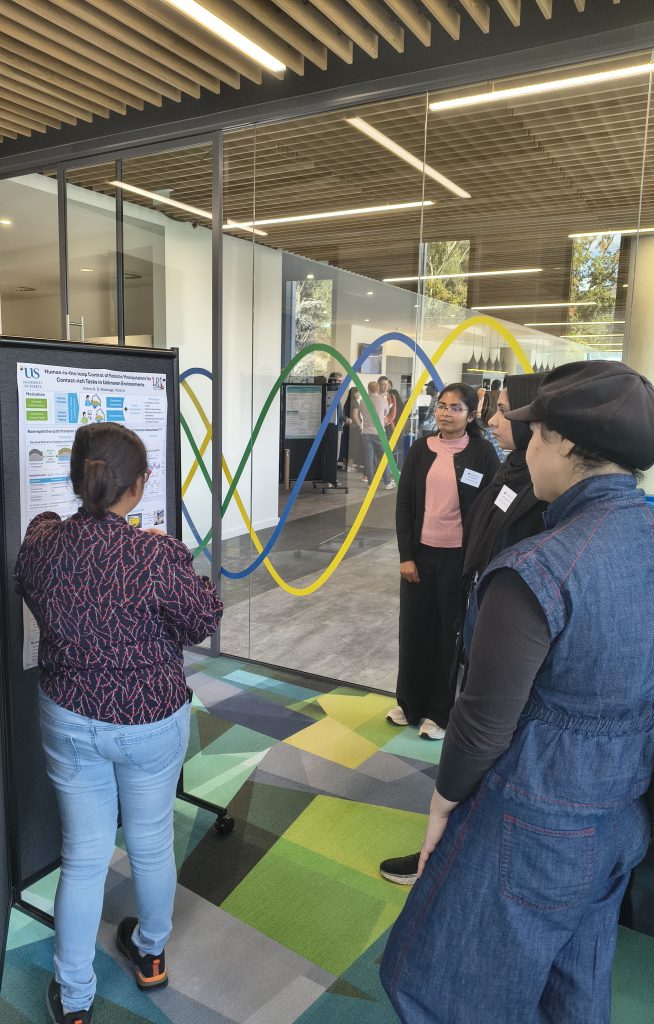
On 14-15 September 2026, the ACE Network, UKACC and MathWorks welcomed around 50 early career researchers, PhD students, academics and industry professionals to MathWorks’ Cambridge headquarters for a two-day Summer School focused on the future of automatic control engineering.
Organised by Francesca Boem (UCL) and Fulvio Forni (University of Cambridge), the event was designed to equip the next generation of control engineers with actionable technical insights and collaborative frameworks, as well as fundamental skills for control theory research. Key outcomes explored included demystifying industry-academia partnerships, establishing best practices for IP and data sharing, and evaluating the impact of AI, machine learning, and model-based design on future control paradigms.
Participants travelled from institutions across the UK, representing a wide range of disciplines and application domains including aerospace, automotive, energy systems, batteries, fusion, chemical processes, software engineering and AI. The Summer School provided an opportunity to learn from leading experts, engage directly with industry, and build new professional networks across the control community.
Day One: Building Stronger Industry-Academia Collaboration
The first day focused on collaboration, exploring how researchers can successfully engage with industry and maximise the impact of their work.
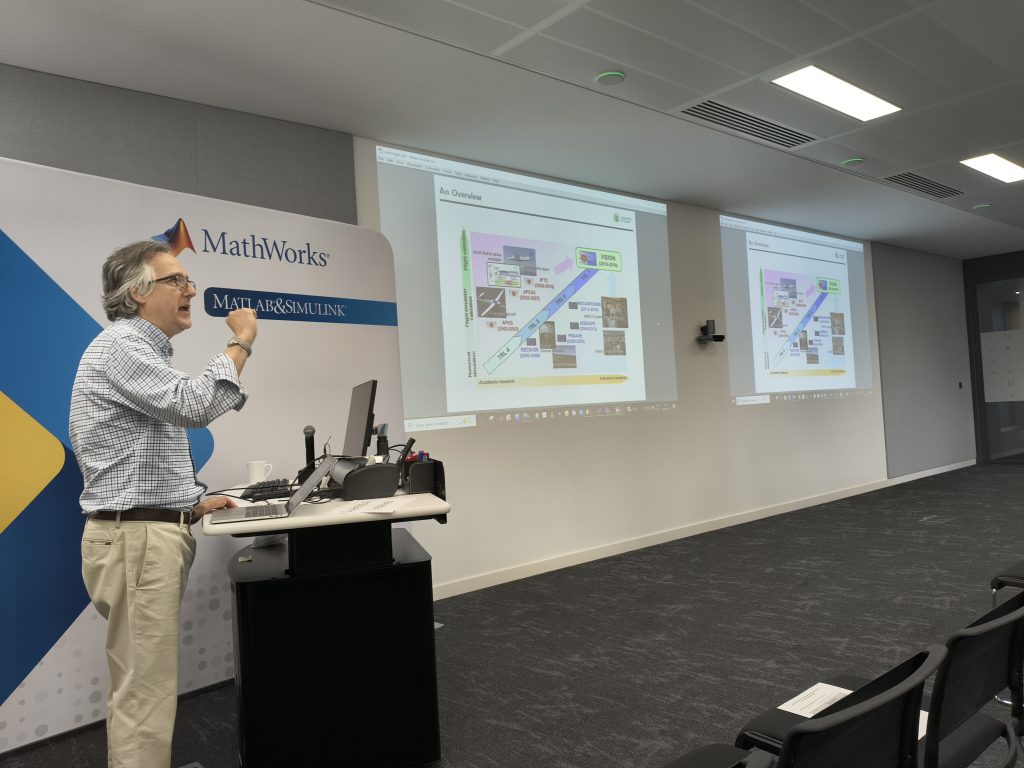
The programme opened with a keynote lecture from Professor Christopher Edwards (University of Exeter), who shared insights from his extensive experience spanning both fundamental research and industrial collaboration. Drawing on examples from aerospace applications and translational control research, he highlighted the opportunities and challenges involved in taking advanced control concepts beyond the laboratory and into practice.
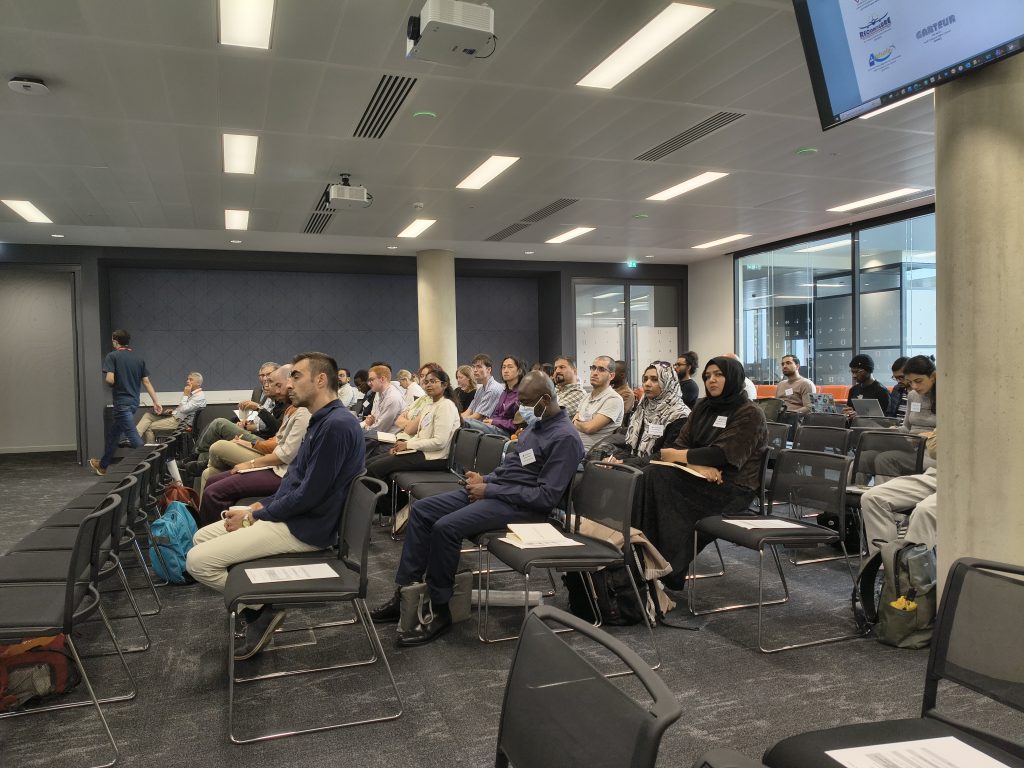
One of the highlights of the day was the industry discussion panel, which brought together representatives from UKAEA, Digital Catapult, Coventry University, MathWorks and academia. The discussion covered a broad range of topics including AI in control systems, skills development, data access, intellectual property, and effective pathways for industry engagement.
A recurring theme throughout the conversation was the growing importance of digital twins, benchmark problems and shared platforms as mechanisms for collaboration. Panellists discussed how these approaches can help organisations work together while managing concerns around confidentiality, cybersecurity and intellectual property.
The discussion also explored how artificial intelligence is changing the landscape of control engineering. While data-driven methods are creating significant opportunities, panel members emphasised that a strong understanding of control fundamentals remains essential. Rather than replacing traditional approaches, AI is increasingly being integrated with established control methodologies to tackle more complex and interconnected systems.
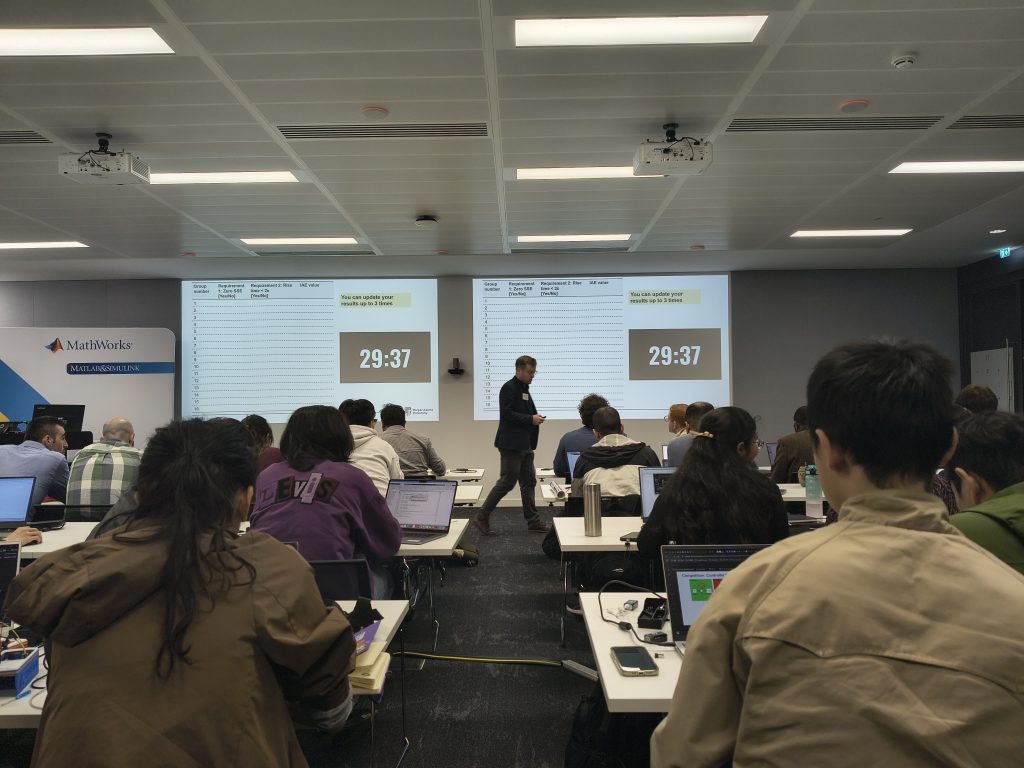
The afternoon shifted towards networking and community building. A collaborative team exercise led by Dr Ross Drummond encouraged participants to work together across institutions and backgrounds, helping to establish connections that continued throughout the event.
The day concluded with a series of quick-fire presentations showcasing current research and industrial challenges. These sessions highlighted the breadth of activity taking place across the UK control community and provided valuable opportunities for discussion and future collaboration.
Day Two: From Fundamental Theory to Practical Control Design
The second day focused on control design, bringing together cutting-edge theory and practical implementation.
Professor Alessandro Abate opened the programme with a plenary lecture on the integration of formal verification, machine learning and control. His presentation explored how methods from logic, learning and decision theory can be combined to address increasingly complex control and verification problems, offering participants a glimpse into emerging directions in the field.
This was followed by a tutorial session from Professor Joaquin Carrasco, who provided an accessible introduction to input-output methods for control analysis and design. The session demonstrated how classical robustness concepts continue to underpin modern control methodologies and remain highly relevant in today’s increasingly uncertain operating environments.
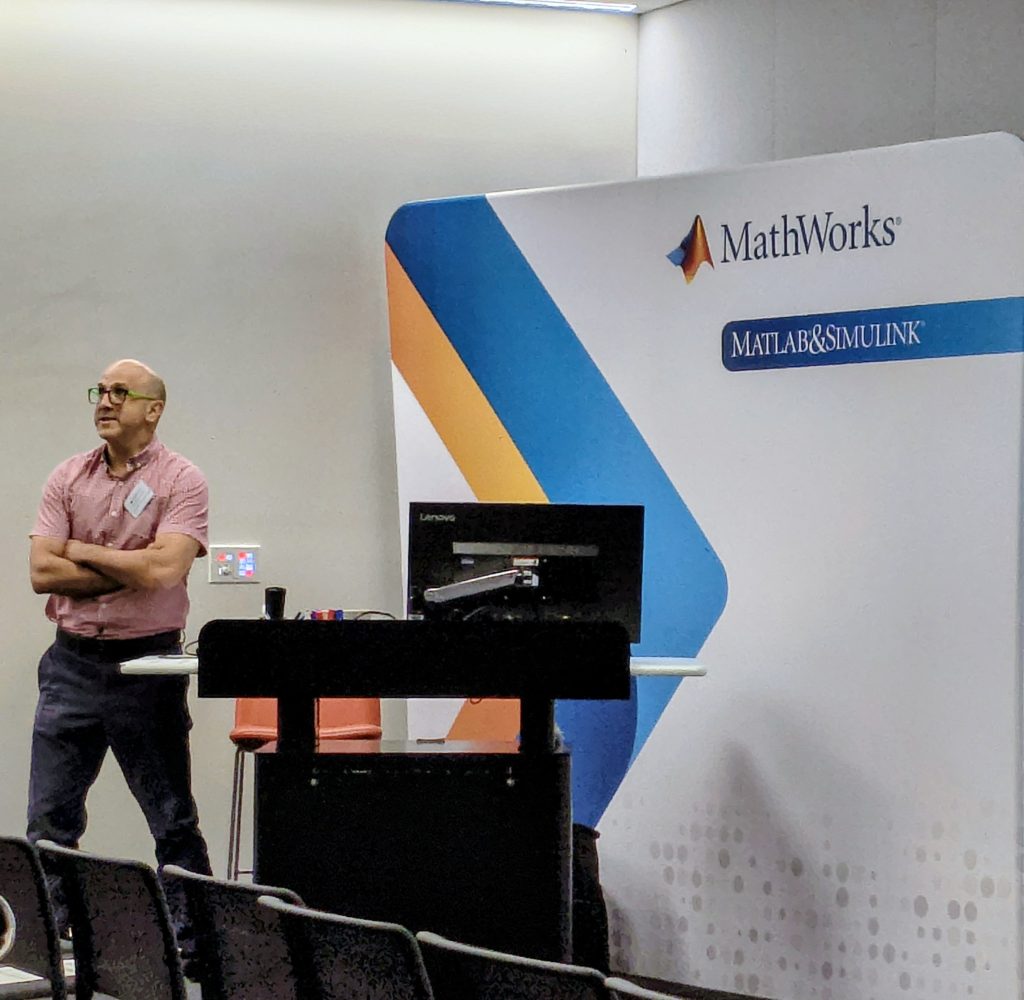
The afternoon was dedicated to practical implementation. Engineers from MathWorks introduced participants to model-based design approaches and demonstrated how control concepts can be translated into deployable solutions using modern engineering workflows.
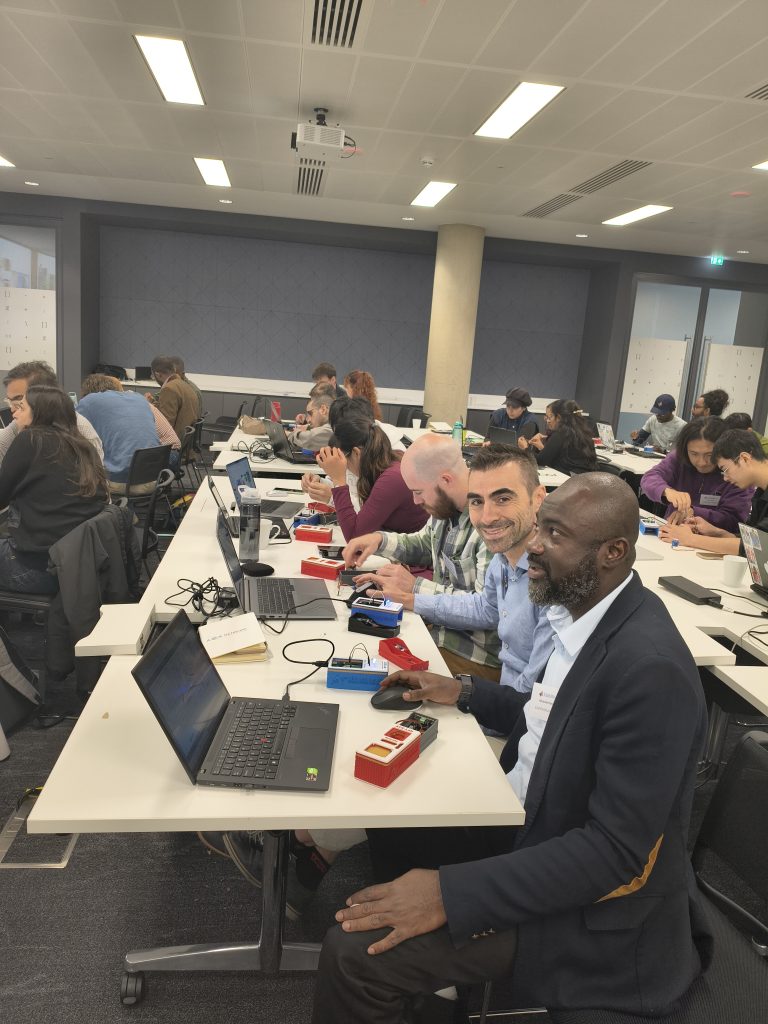
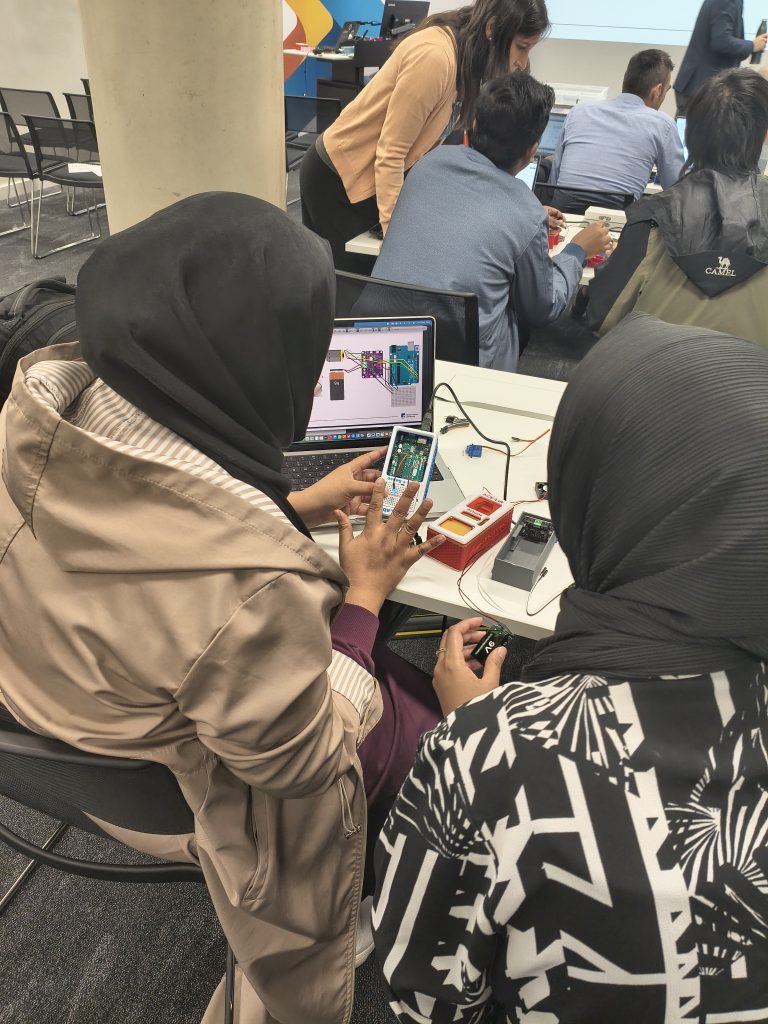
A particularly popular component of the programme was the hands-on workshop on automated code generation for microcontrollers, delivered by Dr James Pickering and MathWorks. Participants were able to experience first-hand how mathematical control models can be transformed into executable embedded code, providing valuable insight into the engineering pathway from theory to deployment.
These practical sessions reinforced one of the central messages of the Summer School: successful control engineering requires not only strong theoretical understanding but also the ability to implement, validate and deploy solutions in real-world environments.
Looking Ahead
Across both days, the Summer School highlighted the continuing strength and diversity of the UK control community. Discussions consistently returned to the importance of collaboration, openness and interdisciplinarity in addressing future challenges.
Whether considering AI-enabled control systems, industrial data sharing, robust verification techniques or practical deployment tools, participants recognised that the future of control engineering will depend on researchers and practitioners working together across traditional disciplinary and organisational boundaries.
The event also demonstrated the enthusiasm and talent within the next generation of control engineers. By bringing together researchers at different career stages alongside experienced industrial and academic leaders, the Summer School provided a valuable platform for knowledge exchange, networking and community building.
The organisers would like to thank all speakers, panellists, participants and partners, particularly MathWorks for hosting the event and supporting its delivery. We look forward to building on the connections and conversations established during the Summer School and to continuing to strengthen the UK’s automatic control engineering community.